
This microhistory takes place on or May involve the Ancestral lands of the Miwok (Miwuk; Mi-Wuk; Me-Wuk) People, including the Northern Sierra Miwok (Me-Wuk), Central Sierra MiWok, Washoe, Confederated Villages of Lisjan, and the Yokuts Peoples of California.
(Jump to Article Transcriptions)

GB.1860.12A was a young male Grizzly or North American Brown Bear, captured, on July 23, 1860 after multiple herdsmen under the employ of cattle rancher and logger William Dennis encountered a family unit consisting of GB.1860.12, an adult female potentially of advanced age, and her dependent young. GB.1860.12 was killed, orphaning five cubs with a common maternal relationship, among them, GB.1860.12A, GB.1860.12B, GB.1860.12C, T. GB.1860.12D and GB.1860.12E.
As the events involved in this microhistory involve the orphaning, live capture, domestication, public display of GB.1860.12A, this Bear has been assigned a Unique Animal Number (UAN). All events here described are encounters which impact one or more predator agency physically, and are so classed as Tier 1 events.
First reference to the microhistory of GB.1860.12A and family was made by the San Andreas Independent and can be subsequently followed through additional California publications including the Daily Alta California, the Daily National Democrat, the San Joaquin Republican, and the Sacramento Daily Union through July, August, and September of that year.1
The geographic locus of this microhistory may suggest dialogue with the history of the California Grizzly, an extinct subtype of Grizzly or North American Brown Bear with critical relationships to nineteenth century settlement and extractivist practices.2
GB.1860.12A
July 23 1860

On July 23, 1860, GB.1860.12 and her five cubs were hunted by multiple herdsmen under the employ of cattle rancher and logger William Dennis in Silver Valley in the Sierra Nevada Mountains east of San Andreas in Calaveras County, California in the United States. All five of GB.1860.12’s offspring survived the encounter: two cubs (T.GB.1860.12D and T.GB.1860.12E) escaped and three (GB.1860.12A, GB.1860.12B, and GB.1860.12C) were lassoed and successfully captured.
GB.1860.12A’s health at the time of capture unknown, but reference is made to the size of GB.1860.12’s cubs as approximately that of an adult coyote. Explicit reference to the weight of these cubs is not made but may have been in the range of 15-45lbs (6.8-20.4kg), potentially suggesting their birth earlier that same year.3
Dennis‘s 1859 and 1860 acquisition of land in the vicinity of the Union Water Company‘s reservoir and Grizzly Bear Valley further situates his presence in Silver Valley, and places GB.1860.12A’s microhistory in dialogue with others involving water management in the Sierra Nevada Mountains, their associated ecoregion, and the Temperate Conifer Forests biome.4
Despite GB.1860.12A’s connection to social groups of the American west including hunters, loggers, and cattle ranchers, the involvement of livestock, domestic, or companion animals in this microhistory is unknown. The role of human retaliation is not known for this microhistory, but a relationship between the proximity of GB.1860.12 and cubs to Dennis’s
ranching operations is known.5 Local, relevant prey species are not referenced by this microhistory. Neither human injury nor fatality are present in this microhistory.
GB.1860.12A
August 6, 1860

Following the live capture events of 23 July, 1860, three of GB.1860.12’s surviving cubs became captive bears. Now orphaned and separated from littermates T.GB.1860.12D and T.GB.1860.12E, cubs GB.1860.12A, GB.1860.12B, and GB.1860.12C likely all three were bound for the domestic animal or pet trade.
From their capture to the later public display of GB.1860.12A at the Stockton Agricultural Fair, record does not include mention of where these bears were kept, by whom, or what measures were or were not involved in their care. It is a certainty that these cubs were subject to significant environmental insufficiency.
The involvement of William Dennis may describe relationships to logging activities connected to Wm. Dennis & Co., its partners and facilities, as well as the Willow Creek Sawmill near San Andreas and its supply chains to Jenny Lind, California.6 This context further involves the history of these bears with social groups of the American west, including hunters, loggers, ranchers. It is not clear whether, in addition to men associated with William Dennis & Co., women were involved in the care of these bears, but their potential involvement should be considered in this microhistory particularly in dialogue with the history of domestication which underlies it.
Their previously-described size heavily suggests that their orphaning and extraction from the Temperate Conifer Forests biome, Sierra Nevada Forests ecoregion to which they had only recently been exposed, fell at a period of summer activity critical to their physical and social health and development. The documented low survivability of cubs orphaned in their first year of life is compounded in the case of GB.1860.12A and captive siblings not only by their removal from their mother and environment but by their potential immersion in the novel California Interior Chaparral and Woodlands ecoregion and Mediterranean Forests, Woodlands and Scrub biome. Their domestication also reflects a change in this microhistory’s Indigenous land relationship to potentially involve the lands of the Central Sierra Miwok and Plains Miwok Peoples of California.
All three appear to have been presumed alive by the Daily Alta California’s August 6th, 1860 recirculation of their original microhistory (first published by the San Andreas Independent). The trails of GB.1860.12B and GB.1860.12C cease here. A representative location for the cubs’ captivity has been set to a location local to the site of Wm. Dennis and Co.’s business in San Andreas per an 1860 advertisement.7
The involvement of livestock animals, as well as domestic, or companion animals, is unknown for this microhistory. This microhistory has no known association to bloodsport. Neither human injury or fatality present and the involvement of livestock, domestic, or companion animals in this microhistory is unknown.
GB.1860.12A
25 – 27 August 1860

At some point (likely) between 25 and 28 August, 1860, the captive young GB.1860.12A was transported from the vicinity of San Andreas, Calaveras County, California, United States for public display at the Stockton Agricultural Fair from August 28, to the 2 of September.8
Travelling across the California Interior Chaparral and Woodlands ecoregion and the Mediterranean Forests, Woodlands and Scrub biome before arriving in the California Central Valley Grasslands ecoregion and Temperate Grasslands, Savannas, and Shrublands biome in the vicinity of Stockton, California, this microhistory reflects additional change in GB.1860.12A’s relationship to Indigenous lands, further involving the lands of the Miwok (Miwuk; Mi-Wuk; Me-Wuk) People, including the Central Sierra Miwok and Plains Miwok, as well as those of the Confederated Villages of Lisjan and the Yokuts Peoples of California.
Reference is not made to the presence of other members of the family unit, including GB.1860.12B or GB.1860.12C, the other two surviving cubs of the three orphans captured following the killing of their mother, GB.1860.12, by multiple herdsmen under the employ of cattle rancher and logger William Dennis on or about July 23, 1860. Their stories should be considered in dialogue with the pet trade in California as GB.1860.12A’s microhistory will later suggest.
The role of Dennis in the labour of transporting GB.1860.12A is not clear but his involvement, or that of his or his company’s (William Dennis & Co.), hired men may be presumed from later context, potentially contributing to further contact between GB.1860.12A and social groups of the American west, including hunters, loggers, ranchers. It is not known whether GB.1860.12A was transported via the Old Stockton Road or the New Stockton Road, but the latter is likely.9 The involvement of livestock animals is unknown but abundantly likely.
It is not clear whether women were involved in the transportation and care of GB.1860.12A during this period, but his “handler” is later referred to as male. GB.1860.12A’s transportation and continued captivity during late summer or early autumn enters dialogue with what would otherwise have been the period of hyperphagia critical to the survival of lactating mothers and cubs during the winter rest period in the months to follow.10 Neither human injury or fatality present and the involvement of livestock, domestic, or companion animals in this microhistory is unknown.
GB.1860.12A
28 August – 2 September 1860
From 28 to 31 August, 1860, GB.1860.12A was publicly displayed as a trophy at the Stockton Agricultural Fair in Calaveras County, California, United States, chained alongside livestock animals including hogs, sheep, rams, fowl, and cattle in a corner of crowded and noisy pavilion of the San Joaquin Valley Agricultural Society and attended by one unnamed handler who may have been William Dennis.

During late summer or early autumn enters dialogue with what would otherwise have been the period of hyperphagia critical to the survival of lactating mothers and cubs during the winter rest period in the months to follow, GB.1860.12A was exposed to men and women belonging to various social groups in the vicinity of Stockton, California. The fair was held on the Ancestral land of the Miwok (Miwuk; Mi-Wuk; Me-Wuk) People, the Confederated Villages of Lisjan, and the Yokuts People of California within the California Central Valley Grasslands ecoregion and Temperate Grasslands, Savannas, and Shrublands biome, environs abundantly likely to have been entirely unfamiliar to what little GB.1860.12A may have experienced of them. In addition to livestock delegated to the pavilion area, numerous agricultural products were displayed.
Details of GB.1860.12A’s relationship to a single human in a caregiving role are referenced in this microhistory. It is not known whether the “handler” to which the article refers suggests the presence of one of the herdsmen who killed GB.1860.12 and collected three of her five surviving cubs, GB.186012A and littermates GB.1860.12B and GB.1860.12C, as T.GB.1860.12D and T.GB.1860.12E escaped, William Dennis himself, or another actor representing the interests of William Dennis & Co. GB.1860.12A’s public display and continued captivity at the Stockton Agricultural Fair can be read as a performance, one in which significant environmental stress and psychological distress are evident. While reference to GB.1860.12A’s health is not explicitly stated, the health profile of an orphaned cub separated from littermates can be considered poor. Understanding of GB.1860.12A’s relationship to hunters, loggers, and ranchers may be improved with further context.

The mention of domestic pet trends by the San Joaquin Republican in dialogue with GB.1860.12A’s display at the fair may support the conclusion that the killing of GB.1860.12 and the live capture of her cubs reflects motivational dialogue with the pet trade of of nineteenth century California. GB.1860.12A’s display as a live trophy at the 1860 Stockton Agricultural Fair may have been motivated by trade, sale, or by the display of live capture animals as trophy for status among certain social groups of the American west. GB.1860.12B or GB.1860.12C are not known to have been present at the Stockton Agricultural Fair. Their stories should be considered in dialogue with the pet trade. Likewise, GB.1860.12A’s history should be considered in dialogue with the possibility of transfer of ownership, and the popularity of domesticating Grizzly Bear cubs as pets among women of the American west should also be considered.
GB.1860.12A’s microhistory involves a single predator animal and has no known association to bloodsport at this time. Neither human injury or fatality present and the involvement of domestic, or companion animals in GB.1860.12A’s microhistory, is not known.

An article published in the Sacramento Daily Union referring to the death of GB.1860.16 (entry forthcoming) further corroborates the identity of GB.1860.12A as the cub of GB.1860.12 and the lone member of his litter to be publicly displayed at the Stockton Agricultural Fair.
CLICK TO EXPAND article transcriptionS
“Catching Young Grizzlies,” Daily Alta California, 6 August 1860,
“The herdsmen employed by Wm. Dennis to take care of his cattle in Silver Valley, some two weeks ago, killed a large grizzly and lassoed three of her cubs. They are about the size of a coyote. The animal had five cubs following her, two of which escaped. — San Andreas Independent.”
“Catching Young Grizzlies,” Daily National Democrat, 8 August 1860,
““The herdsmen employed by Wm. Dennis to take care of his cattle in Silver Valley, some two weeks ago, killed a large grizzly and lassoed three of her cubs. They are about the size of a coyote. The animal had five cubs following her, two of which escaped. — San Andreas Independent.”
“Items at the Fair,” San Joaquin Republican, 2 September 1860,
“Items at the Fair. As many Californians think they cannot get along very well without the companionship of a grizzly bear, it was of course not to be supposed that our Agricultural Society could come off without a contribution of the kind. A cub had been chained up in a corner of the Pavilion. This juvenile article of “Bruin” was contributed by Mr. William Dennis, of San Andreas. / Lippincott & Belding had a good display of their soda, saraperilla, Congress water, essences and bitters. They manufacture a superior article in this line / Mr. S. C. Tyler, exhibited some apples, which he exhibited at the State Fair of 1859. He does not know what name to call them, except “Everlasting Keepers,” as they are now in excellent condition. We think it was the same gentleman who exhibited very large onions. Sixteen hundred pounds were raised this year in a patch 16(1/2) feet by 49 (1/2) feet. / The display of apples was very find, the fruit being of great size. Mrs. Benson and Messrs. Scott, Hurey, Gardner and Garcelon & Allen, in the country and Messrs. Strout, Barnes and others in the city had apples there from fifteen to seventeen inches in circumference. / On the second day, Tuolumne seceded from the Fair, the turtle bearing the name of that respectable county upon his back, climbing out of the pond and walking off. His scarlet back will betray him. / There was a magnificent display of plums of all kinds. Mr. Wm. P. Miller had a good show in this respect. There were some small branches of plum trees, not two feet in length, which contained a half-peck of them. There was no card upon them. / An exhibition of silk cocoons attracted much attention. They were raised in San Jose, but the name of the owner was not attached. / Mr. J. M. White had a cluster of poke berries, a fruit unknown to emigrants from “down east.” He also had a cluster of very large pears.”
“Another Grizzly Killed,” Sacramento Daily Union, 11 September 1860,
“Another Grizzly Killed.—A few days ago the hands employed by William Dennis to herd his cattle in the mountains, at Silver Valley, set a gun for a grizzly, and were successful in wounding him. They followed his track by the blood for a few miles, overtook and dispatched him. It will be remembered that some six weeks ago we mentioned the killing of an old she-bear and the capture of three of her cubs in the same place by the same parties. It is a favorite haunt for Mr. Bruin. About a week since the men saw eight grizzlies in a band in open day, at the edge of the valley. One of the cubs captured was exhibited at the Stockton Agricultural Fair. It is an intelligent, but at the same time a most savage and untamable little creature. He will snap and growl at every one save his keeper, and sometimes even bite him.— San Andreas Independent..”
THIS MICROHISTORY IS IN DIALOGUE WITH THE FOLLOWING ENTRIES ON PMN:
Notes:
- The relevant issue of the San Andreas Independent is not digitized. See the Library of Congress for more information on this newspaper. “Catching Young Grizzlies,” Daily Alta California, 6 August 1860, Volume 12, Number 217; “Catching Young Grizzlies,” Daily National Democrat, 8 August 1860, Volume 4, Number 142; “Items at the Fair,” San Joaquin Republican, 2 September 1860, Volume X, Number 209; “Another Grizzly Killed,” Sacramento Daily Union, 11 September 1860, Volume 19, Number 2951. Courtesy of the California Digital Newspaper Collection (CDNC), Center for Bibliographic Studies and Research, University of California, Riverside. Public Domain.
- Alexis M. Mychajliw et al., “Coupled Social and Ecological Change Drove the Historical Extinction of the California Grizzly Bear (Ursus arctos californicus),” Proceedings of the Royal Society B: Biological Sciences 291, no. 2014 (2024): 20230921.
- “Grizzly Bear,” U.S. Fish & Wildlife Service.
- “Boiler Exploded,” Stockton Independent, 10 January 1857, Volume 1, Number 16; “Heavy Loads,” Nevada Journal, 12 November 1858, Volume 9, Number 26; “SETTLEMENT OF THE EBBETTS PASS AREA,” Calaveras Heritage Council, 2025; Marvin, Judith, 2011, Guidebook for Ebbetts Pass as cited in “Bear Valley,” Calaveras Heritage Council, 2025; “Union / Utica Water Company,” Calaveras Heritage Council, 2025; “Where Does Your Water Come From?“, Union Public Utility District; “Jenny Lind: Historical Landmark,” California State Parks. “Silver Valley Campground,” Forest Service, U.S. Department of Agriculture. Learn more about how to support the Calaveras Heritage Council on their website.
- Caroline Abbott, “‘Killed a large grizzly:’ GB.1860.12,” Predator Microhistory Network.
- “Boiler Exploded,” Stockton Independent, 10 January 1857; “Heavy Loads,” Nevada Journal, 12 November 1858; “SETTLEMENT OF THE EBBETTS PASS AREA,” Calaveras Heritage Council, 2025; Marvin, 2011, Guidebook for Ebbetts Pass as cited in “Bear Valley,” Calaveras Heritage Council, 2025; “Union / Utica Water Company,” Calaveras Heritage Council, 2025; “Union / Utica Water Company,” Calaveras Heritage Council, 2025; “Where Does Your Water Come From?“, Union Public Utility District; “Jenny Lind: Historical Landmark,” California State Parks. “Silver Valley Campground,” Forest Service, U.S. Department of Agriculture.
- “Page 4 Advertisements Column 4,” Stockton Independent, 9 May 1857, Volume 1, Number 33.
- Page 2 Advertisements Column 2. San Joaquin Republican, Volume X, Number 201, 25 August 1860 states: “Contributors to the first annual Fair of [the San Joaquin Valley Agricultural Society] are hereby notified that the [Pavilion] and Cattle Ground of the Society will be open for the reception of articles and animals intended for exhibition on this Saturday morning, August 25th.”
- “Transportation and Communication,” Calaveras Heritage Council, 2025.
- For more details, see “5 Stages of Activity and Hibernation.” North American Bear Center.
Cite This Page
Chicago
Caroline Abbott. “”Chained up in a corner of the pavilion:” GB.1860.12A” Predator Microhistory Network. [Accessed Month, Day, Year].
MHRA
Caroline Abbott, “”Chained up in a corner of the pavilion:” GB.1860.12A,” Predator Microhistory Network. Link. [Accessed Day Month Year]
MLA
Abbott, Caroline. “”Chained up in a corner of the pavilion:” GB.1860.12A.” Predator Microhistory Network, 28 October, 2025. Accessed Day Month Year.
APA
Abbott, C. 2025, October 28. “Chained up in a corner of the pavilion:” GB.1860.12A. Predator Microhistory Network.
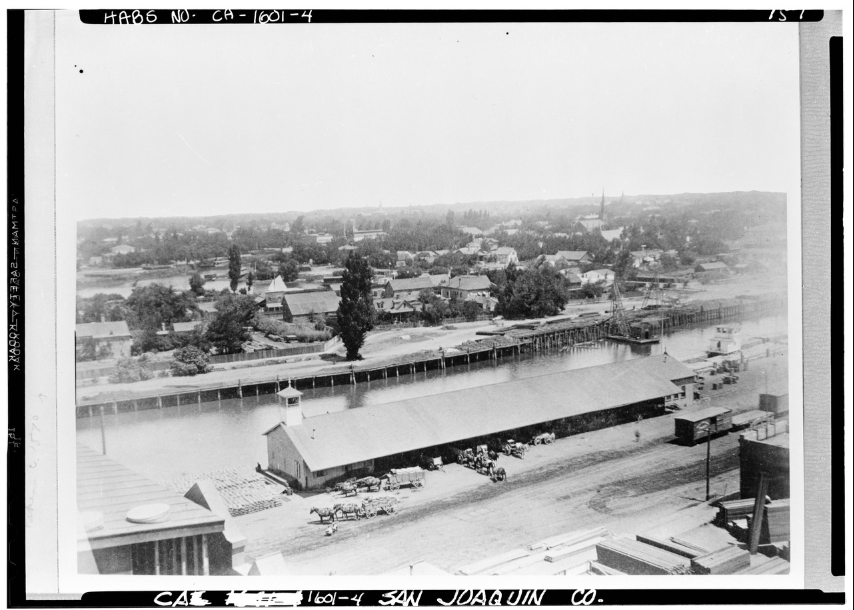
Feature image: Accessed via Wikimedia Commons. Public Domain. SUPPORT THE WIKIMEDIA FOUNDATION HERE.

You must be logged in to post a comment.