
THIS ENTRY For GB.1860.2 IS also DESCRIPTIVE OF THE FOLLOWING CATALOGUE NUMBERS:
GB.1860.3
GB.1860.4

Fig. 1: “Grizzly Hunting,” Marysville Daily Appeal, June 5 1860, Volume I, Number 116 (Marysville, CA). Courtesy of the California Digital Newspaper Collection (CDNC), Center for Bibliographic Studies and Research, University of California, Riverside. Public Domain. Support them here.
This microhistory takes place on or involves the Ancestral lands of the Maidu (including the Mechoopda, Mountain Maidu, and Kojomk’awi (Konkow)), Washoe, Cayuse, Umatilla, and Walla Walla, and Nisenan peoples of California.
Grizzly bears GB.1860.2, GB.1860.3, and GB.1860.4 were killed by a single hunter in May or early June of 1860 in the Sierra Nevada Mountains forty miles east of Oroville on the outskirts of Butte County, California in the United States. The sex of these bears is unknown, and this microhistory has an unknown relationship with maternity.
This entry describes the death of multiple predators involved in a single microhistory. As the events to which this microhistory refers describe the deaths of three animals, the bears involved have been assigned Unique Animal Numbers (UANs). All are encounters which impact one or more predator agency physically, and are so classed as Tier 1 events.

This microhistory is only known to appear in one California newspaper, the Marysville Daily Appeal, on June 5, 1860.1 Though minimal, this source places the deaths of these bears in some degree of chronological context, describing only that the events occurred “lately,” but that all occurred within a one-week period. As such, this microhistory has been assigned a representative date range inclusive of all dates within the week of the 27th of May (one week prior to the article’s publication) through the 2nd of June, 1860.
Further geographic context may suggest that these events occurred in the area of Mountain Spring House Ridge (or the greater, Hartman Bar Ridge) on the divide between the middle fork and south fork of the Feather River, in proximity to the historical location of Mountain Spring House as described in other articles and sources.2 This microhistory may suggest a community of predators at this location, but the specific social relationship between GB.1860.2, GB.1860.3, and GB.1860.4 is unknown.


The geographic locus of these bears’ microhistory suggests a relationship to the Sierra Nevada Forests ecoregion and the Temperate Conifer Forests biome. While this microhistory has no direct relationship to the winter rest period, it does intersect the period of normal activity following winter rest in spring and late spring, which may help to further historicize seasonal Bear relationships with these environments.
While length data and further health details are unknown for these bears, their reported weights of between 400lbs (138kg) to 600lbs (272kg) each may suggest that these predators were adult grizzlies. However, the geographic locus of this microhistory may suggest dialogue with the history of the California Grizzly, a larger, extinct subtype of Grizzly or North American Brown Bear with critical relationships to 19th Century settlement which may suggest the additional possibility that any or all members of the cohort GB.1860.2, GB.1860.3, and GB.1860.4 may have been independent subadults.3

This microhistory’s relationship to the fresh water Feather River system contextualizes the relationship of GB.1860.2, GB.1860.3, and GB.1860.4 to extractivist mining operations, their associated infrastructural elements, and may suggest the involvement of certain social groups not directly implicated in this microhistory. Additionally to hunters of the American west, its reference to developing mining infrastructure including hydaulics and water management operations may suggest relationships between these bears’ histories and miners and prospectors of the American west. Similarly, while this microhistory is not known to involve livestock animals, and the presence of mules is not directly stated, its reference to the accessibility of this region by mule trail may correlate with future entries and with the details of developing road infrastructure. The involvement of domestic or companion animals is unknown.
This microhistory has no known association to bloodsport. It is neither representative of human fatality nor injury and its relationship to human retaliation is unknown. The motivation for the hunt or hunts to which it refers are unknown, and local, relevant prey species are not referenced within this microhistory.
this microhistory is NOT CURRENTLY in dialogue with ANY other entries on pmn.
Notes:
- “Grizzly Hunting,” Marysville Daily Appeal, June 5 1860, Volume I, Number 116 (Marysville, CA).
- Ibid.; “Daring Highway Robbery!,” Weekly Butte Record, August 2 1856, Volume 3, Number 40 (Oroville, CA); “County Line,” Weekly Butte Record, July 1 1865, Volume 12, Number 35 (Oroville, CA); “Robberies is Mountain Spring” Weekly Butte Record, November 9 1867, Volume 15, Number 3 (Oroville, CA); “Dissolution,” Weekly Butte Record, April 15 1865, Volume 12, Number 24 (Oroville, CA). Mountain Spring House’s approximate historical location can be more closely pinpointed by following several sources. In particular, the location’s significance to the later, 1865 amendment to the line between Butte County and Plumas County, as well as its relationship to crime in 1854, 1856, and 1867 (and indeed, throughout these decades), can be used to further contextualize its historical location. The map cited above (see Figs. 3 and 4), though a later rendering, further describes this historical location’s relationship to Californian topography and other historical locations.
- Alexis M. Mychajliw et al., “Coupled Social and Ecological Change Drove the Historical Extinction of the California Grizzly Bear (Ursus arctos californicus),” Proceedings of the Royal Society B: Biological Sciences 291, no. 2014 (2024): 20230921.
Cite This Page
Chicago
Caroline Abbott. “GB.1860.2; GB.1860.3; GB.1860.4.” Predator Microhistory Network. [Accessed Month, Day, Year].
MHRA
Caroline Abbott, ‘GB.1860.2; GB.1860.3; GB.1860.4’, Predator Microhistory Network. [Accessed Day Month Year]
MLA
Abbott, Caroline. “GB.1860.2; GB.1860.3; GB.1860.4.” Predator Microhistory Network, 14 June, 2025. [Accessed Day Month Year].
APA
Abbott, C. 2025, June 14. GB.1860.2; GB.1860.3; GB.1860.4. Predator Microhistory Network.
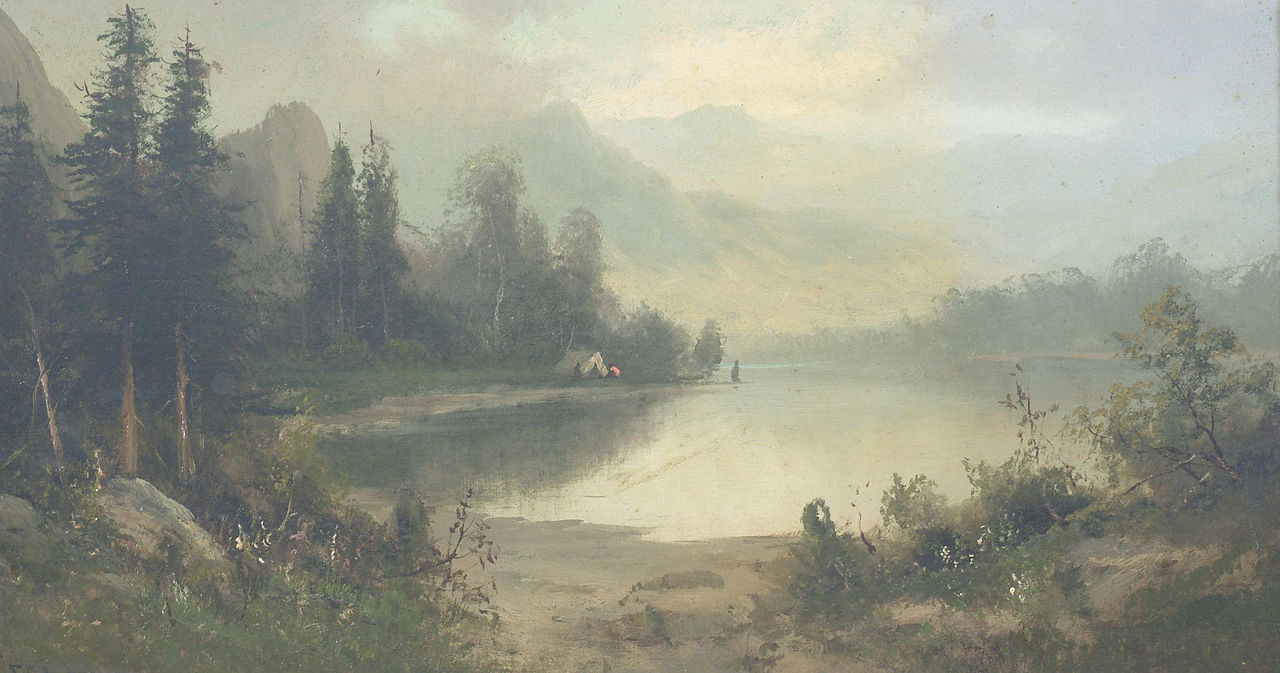
Feature image: Morning on Feather River, California, Frederick Ferdinand Schafer (1839–1927). Unknown date. Public Domain. Accessed via Wikimedia Commons.

You must be logged in to post a comment.